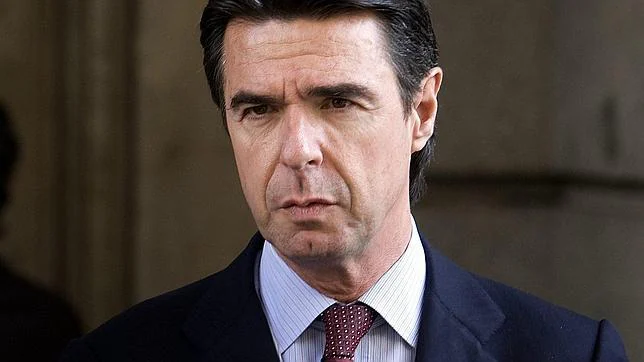
SPAIN Deregulation and a lack of competition are the main causes of high fuel prices in Spain, according to a recent study by the European Commission. Only Denmark and Malta have higher pre-tax prices for petrol, and Spain is eighth among the EU's 28 for diesel fuel. Consumer organizations have for years been asking for a governmentally-established maximum such as was in force until the late 1990s, when the market was opened up under the excuse that this would bring in more competition. A spurious argument, it turned out, and a problem that no government has wanted to deal with - a situation of which the oil companies have been very quick to take advantage.>>>
Showing posts with label PRICES. Show all posts
Friday, 2 August 2013
Wednesday, 31 July 2013
Pre-tax petrol prices in Spain are among highest in EU
SPAIN Deregulation and a lack of competition are the main causes of high fuel prices in Spain, according to a recent study by the European Commission. Only Denmark and Malta have higher pre-tax prices for petrol, and Spain is eighth among the EU's 28 for diesel fuel prices. Prices at the pump, though, which include taxes (boy, do they include taxes!), has Spain at about the middle of the price range, which means that the oil companies are making more profit than might be reasonable (we are preparing an item on petrol price-fixing in Spain). Consumer organizations have for years been asking for a governmentally-established maximum such as was in force until the late 1990s, when the market was opened up under the excuse that this would bring in more competition. A spurious argument, it turned out, and a problem that no government has wanted to deal with - a situation of which the oil companies have been very quick to take advantage.>>>
Friday, 19 July 2013
Petrol and diesel prices up by almost 2% in a week
Fuel prices in Gibraltar remain lower
SPAIN As usual, the summer holidays bring with it an increase in prices at the pump. Petrol is up to €1.45/litre, and diesel, €1.36, according to the EC's Oil Bulletin. This has been so since the beginning of July - yes, the beginning of the holidays in Spain (and many other countries in Europe), when some 80 million vehicles are expected to begin their annual peregrination, plus a larger influx of tourists is expected. Fuel prices have gone up by 2.3% since July 1, and by 3.4% for the same week last year, despite the fact that Brent oil prices are showing signs of stabilisation. Prices in the rest of Europe>>>
Labels:
BIO-DIESEL,
DIESEL,
EUROZONE,
GIBRALTAR,
LIFE IN SPAIN,
OIL,
PETROL,
PRICES,
SPAIN
Wednesday, 15 May 2013
Housing sales drop by 12.6% in March after three months of upward trend
SPAIN March came in with a year-on-year drop of 12.6% compared to the same month in 2012. A total of 22,086 sales took place, the lowest number since April last year, according to the National Statistics Institute, which reported slightly more than 21,500 at the time. This year's drop comes after three consecutive months of annual figures heading upwards, and is probably due to the end of tax incentives that came into effect on January 1, and stopped in March. There is an inertia effect due to sales being started before January and closed after the beginning of the year, likewise towards the end of March.
Monday, 13 May 2013
Bombona goes up tonight to its legal maximum of €17.50
SPAIN The price of a household bottled butane gas barrel (bombona) goes up by 2.15% at midnight tonight to €17.50, the maximum price it is allowed to be sold at until next year. It will therefore have increased by 7.2% since January 1. In answer to possible questions about the whys and wherefores of yet another price increase (and we don't like the answers any more than you, Dear Reader) let us just say that it has to do with an accumulated tariff system that we simply don't understand, no matter how many times we have asked. Something to do with the suppliers selling at a loss (but posting enormous profits)...
Thursday, 28 March 2013
Bombona price up, electricity down
SPAIN The price of bottled gas, bombonas, went up on Tuesday by 5%, from €16.32 to €17.13, according to the nation's official bulletin, BOE. The announcement also said that the price, controlled by decree, is to be revised every two months instead of the present three, and that it cannot be raised or lowered (that'd be nice!) by more than 5%. Consumer organizations have complained that this is hardly the time for an increase that affects some 11 million homes in Spain, and is the only source of heating and cooking. Nevertheless, a bombona in Spain is still one of the cheapest of its kind in Europe, or at least the 'old' Europe'. (We have tried to find a comparative list of prices but failed - can anyone help? In the meantime, and on the Good News side, the price of electricity goes down from April, as we reported here.
Wednesday, 20 March 2013
Brilliant! Electricity rates to go down by 6.7% in April
![]() |
| Good news! (Phew!) (Image by carrollbryant) |
SPAIN This may sound like an April Fool joke, but it isn't (Spain's equivalent is December 28). The vast majority of consumers pay the TUR (Tarifa de Último Recurso) domestic rates, which is due to go down from the first day of next month. This is the first time such a miracle is happening since July 2009, though the rates did go down in October 2012, but went unnoticed because VAT went up at the same time. The Spanish system of power auctions and price highs and lows is largely incomprehensible to the average consumer, and certainly to us at CampoPulse, so all that remains is to be grateful for small blessings...
Thursday, 14 March 2013
Taxi prices to go up by 3.4% this year
![]() |
| Waiting on Blas Infante |
ALGECIRAS Taxi rides in Algeciras, or starting there, will be costing a maximum of 3.4% more, which is the CPI (Consumer Price Index, or IPC in its Spanish acronym) for September last year, the annual yardstick. This does not mean that prices will all be going up by that percentage and close details will not be available until after the Council's session this morning, which will be giving its approval. As an example, a run of, say, €6 (at midday on a weekday), will very likely be going up to €6.16, about 2.6% more, which is considered an average. If the increase is approved by the Council, the revision will also have to be approved by Junta's Dirección General de Relaciones Financieras con las Corporaciones Locales (General Directorate of Financial Relations with Local Corporations).
Wednesday, 16 January 2013
Some things DID go down on January 1
In our headline about price increases of January 10 (graphic, left), we said that 'nothing came down'. We admit to being wrong: making people redundant is now cheaper: down, too, is our purchasing power. If products and basic services increased from the very start of 2013, usually by quite a lot more than pension or minimum wages, purchasing power in Spain has declined considerably, to which the Government responds by increasing direct and indirect taxes, lowering or freezing public service employees' salaries and a timid, if not plainly ridiculous, upping of the minimum wage by just one-sixth of a percentage point, as well as a 1% for pensions over €1,000 monthly and a measly 2% for those below. It might be noted that Spain's Consumer Price Index (IPC in its Spanish acronym) went up by 2.9% last year.
Thursday, 10 January 2013
Friday, 19 October 2012
Ups and downs for consumers
Remember this from just a few days ago? We said that this packet of cream crackers cost €1 one day, and a week later, it had gone up to €1.30 - when VAT went up by only 3%. We sent the item to TioJimeno, who published it on October 12. Surprise, surprise, a week after that, the item had gone down to €1.19 - which is still well above the VAT increase. Is this the power of the media? Or are we consumers getting fed up with the abuse? Do you have any other outrageous price rises? Send them in.
Wednesday, 10 October 2012
VAT went up by how much?
This item was priced at €1 at the Ruiz Galán Supermarket in Jimena about ten days ago. Yesterday, it had gone up to €1.30 - an increase of more than 30%. Can anyone say why? This supermarket chain has a nasty habit of OTT-ing its prices.
Monday, 3 September 2012
What price a cup of coffee?
CAMPO DE GIBRALTAR The price of a cup of coffee -- a sort of home-brewed GDP measuring stick for most of us (though some might say a beer) -- varies according to the status of a place, often wishful thinking, the location or just plain greed. In Jimena, for instance, a coffee still costs €1 - well, it did until Saturday and Prospero hasn't had one since Friday. That, of course, is the price for locals: in some establishments, tourists get charged €1.20 on the grounds that they don't know any better (a short-sighted viewpoint if ever there is). But VAT went up on Saturday, so we wonder if your café con leche went up, too. If it did, no matter where you are in the Campo, please let us know...
Friday, 24 August 2012
Petrol and diesel up again
SPAIN The price of a litre of petrol went up by 2% this week, an accumulative increase of 9% since the first week in July. For the first time ever, a litre of normal petrol costs an average €1.47. Diesel went up too, of course, by 2.5% this, at an average pump price of €1.395. Diesel is used by close to 80% of vehicles in Spain. And, naturally, the price goes up as holidaymakers are heading home from the seaside, which the Dirección General de Tráfico (DGT) calculates at>>>PLEASE BE AWARE THAT YOU WILL SOON BE UNABLE TO READ THE REST OF THIS ITEM UNLESS YOU HAVE SUBSCRIBED. Subscription information will be available soon>>>
Thursday, 16 August 2012
Petrol is up to an average €1.44 a litre
Increased by 6% in seven months
SPAIN (Agencies) Filling the average car tank now costs €5 more than it did a year ago, which, with the cost to the consumer of medical co-payments, has run up the inflation rate to 2.2% for the year so far. The price of petrol has risen by about 10% since this time last year. It is also true that the oil companies 'traditionally' raise their prices in Spain at the beginning of the summer period (surely a mere coincidence), usually in August. Prices fell since April, when they averaged and often exceeded €1.50 per litre, to come down to €1.40 at the end of June. Still, petrol in Spain is cheaper than the average for the 27 European member States, which is €1.633 litre, or 1.653 in the Eurozone. Fuel costs are partly due to crude oil having risen to 113 dollars per barrel, double its price in 2004.
Friday, 29 June 2012
Electricity and gas go up again in July
SPAIN (Agencies) July starts on Sunday, two days away. The news is that electricity and natural gas are going up, almost without warning. We have tried to explain the (cozy government-companies) system and why there is such a deficit in the electric companies' books when they show a profit seemingly every five minutes - so we won't do any more explaining (we can't explain something we do not understand anyway). Nevertheless, electricity is going up for the vast majority of a long-suffering public by an astronomical 3.95%, and natural gas by 2.26% (reports don't say anything about bombonas, but we can assume they'll be going up as well.). We're going to stop this item here because we need to go away and throw up. In any case, your wallet has been warned. (To see other items on the subject -including an attempt at explaining the reason behind these rises, just type in the word 'electricity' in the search widget on the sidebar...)
Tuesday, 29 May 2012
VAT increase 'is not planned' for next year
![]() |
| José Manuel Soria (ABC) |
SPAIN The Minister for Industry, Energy and Tourism, José Manuel Soria, announced last week, at a luncheon by KPMG and Europa Press, that the Government 'is not planning' an increase in the rate of VAT (IVA in Spanish) for next year. Nevertheless, he added, should such an increase occur, its impact on the Spanish economy, particularly in the tourism industry, would have to be studied very carefully. However, he insisted that an increase was not on the table. On the subject of taxes, Soria admitted that the Government had promised to reduce them for the tourism industry, but the present climate does not allow for any such thing "for the time being." He did say, though, that electricity charges would have to go up "at some time" to put an end to the deficit in the electricity system.
Labels:
ECONOMY,
ELECTRICITY,
IVA,
LIFE IN SPAIN,
PRICES,
TAXES,
VAT
Friday, 23 March 2012
Electricity price hikes expected on April 1
SPAIN We told you about the price hike last week but here is the reason behind it, and the percentages. The electric companies' association, Unesa, says that the peajes should be going up by 30%, which would amount to about 15% on our electricity bill. The Supreme Court sided with the companies and ordered the price hike that should have taken place on January 1 to happen as soon as possible. However, the peaje and the price the companies have to pay for the energy have come down, which means that the bills should not go up by more than 12 or 13%. The Spanish power system is so convoluted and complicated to explain that we are not bothering to do so, but way of a general concept you should know that, first, what is called a Tarifa de Último Recurso (TUR, or 'tariff of last resort') and to which some 20 million consumers -that is, the vast majority including us- are subscribed, and which is revised every three months, is made up of two components: the peajes that pay the companies and are regulated by the government, and, second, the price of energy that results from an auction called Cesur (please don't ask, just accept!).
Thursday, 16 February 2012
Spanish electricity, the most costly in Europe
![]() |
| Plant at Aldedávila, Salamanca |
Prices are third in line behind Cyprus and Malta
SPAIN This not come as a surprise to many of our readers, but the latest report from Eurostat places Spain as the mainland country with the highest electricity prices. Only Cyprus and Malta charge more for power. The typical Spanish home, according to Eurostat uses between 2,500 and 5,000 kW/hr, which here are charged over what is considered the 'psychological barrier' price of €0.15 per per kilowatt/hour (kW/hr). The organization does not evaluate the reasons behind the prices, but the debate has raged for a number of years about why the price of Spanish electricity continues to rise. This year, in fact, prices were not raised on January 1st, unlike every other year for at least seven - the reason behind that is more political than anything else, however (see below). Nevertheless, the regular power companies (using nuclear power, for example) blame the subsidies given to alternative renewable energy power companies (e.g. wind or photo-voltaic). On the other hand, the latter accuse the former of getting grants for plants that have long been paid for, and for taking advantage of the wholesale pooling market, which rises regularly. Electricity prices in Spain have risen sharply since 2004 - 80% before tax, according to Eurostat, which says that in 2004 we paid €0.0872 per kW/hr, and we now pay €0.1597. There is a question, though, about whether the increases that have happened over the years are sufficient.>>>
Tuesday, 3 January 2012
A-7 toll road ups prices
COSTA DEL SOL New year, new prices. The toll road from Guadiaro to Málaga (called autopista) went up to a low season's total price of €8.55 - and to €13.95 in summer. The prices were approved by the Ministry for Industry on December 19. Thus, the price rise is in the order of 3.6% for each of the three sections during 'regular' periods, which is more than the CPI (Consumer Price Index) rose all of last year. The new prices per section: barriers at Estepona, €1.85 low season, €3,05 in summer; at Marbella €2.70 / 4.40; and at Málaga €4.00 / €6.50. (...and a Happy New Year...)
Subscribe to:
Posts (Atom)