SPAIN The weekly Council of Ministers last Friday approved a number of changes to the electricity supply industry. Most significant for the consumer is a price rise of 3.2% in August (no firm dat specified but we can assume it will be on the first day). This increase is aimed at sharing out the cost of what is known as the 'tariff deficit' and defined as the cost of electricity compared to what we pay for it. This amounts to some €26 billion, and the measure is aimed at cutting that by €4.5 billion, of which €900m is to be paid by the consumers, another €900m by the state, and the remaining €2.7m by renewable energy companies, which have suffered the most under the changes.>>>
Showing posts with label ELECTRICITY. Show all posts
Tuesday, 16 July 2013
Electricity to go up by 3.2% in August
Monday, 1 July 2013
Booze & backy up, electricity too - but no council tax increase
SPAIN Taxes on tobacco and alcohol went up on Saturday, and electricity rises by 1.2% as from tomorrow, July 1. A pack of cigarettes now costs an average of €0.15 more and all alcohol except wine and beer, is up by about 10%. The government argues that the price of tobacco and alcohol is among the lowest in the EU (they don't mention low wages or unemployment, though). The levy on tobacco will be most noticeable on roll-up tobacco, to which many smokers unable to give up the habit turned because it is cheaper than ready-made cigarettes. Some €400 million is expected to be raised by these increases by the end of the year, and some €700m in 2014. Electricity, on the other hand>>>
Thursday, 28 March 2013
Bombona price up, electricity down
SPAIN The price of bottled gas, bombonas, went up on Tuesday by 5%, from €16.32 to €17.13, according to the nation's official bulletin, BOE. The announcement also said that the price, controlled by decree, is to be revised every two months instead of the present three, and that it cannot be raised or lowered (that'd be nice!) by more than 5%. Consumer organizations have complained that this is hardly the time for an increase that affects some 11 million homes in Spain, and is the only source of heating and cooking. Nevertheless, a bombona in Spain is still one of the cheapest of its kind in Europe, or at least the 'old' Europe'. (We have tried to find a comparative list of prices but failed - can anyone help? In the meantime, and on the Good News side, the price of electricity goes down from April, as we reported here.
Wednesday, 20 March 2013
Brilliant! Electricity rates to go down by 6.7% in April
![]() |
| Good news! (Phew!) (Image by carrollbryant) |
SPAIN This may sound like an April Fool joke, but it isn't (Spain's equivalent is December 28). The vast majority of consumers pay the TUR (Tarifa de Último Recurso) domestic rates, which is due to go down from the first day of next month. This is the first time such a miracle is happening since July 2009, though the rates did go down in October 2012, but went unnoticed because VAT went up at the same time. The Spanish system of power auctions and price highs and lows is largely incomprehensible to the average consumer, and certainly to us at CampoPulse, so all that remains is to be grateful for small blessings...
Tuesday, 22 January 2013
Estimated electricity bills to disappear in April
![]() |
| A bright idea |
Thursday, 13 September 2012
Ombuds(wo)man demands clarity on electricity bills
![]() |
| Soledad Becerril (Photo: absolutsevilla.com) |
Comparative shopping to be encouraged
MADRID The national Ombudsman, Soledad Beceril, has opened an investigation into the Ministry of Industry, Energy and Tourism to find out what is being done about making our electricity bills easier to understand. The ministry has already requested reports from the National Competence and National Energy Commissions. Nevertheless, in a press release Becerril saysSOON YOU WON'T BE SEEING THE REST OF ITEMS LIKE THESE WITHOUT SUBSCRIBING.>>>
Thursday, 6 September 2012
What's all that stuff on your latest electricity bill?
![]() |
| Illustration only (Send us a new one!) |
SPAIN Electricity companies have begun including an additional charge related to re-billing on usage during the last quarter of 2011 and the first of 2012. This will mean an average additional 7% charge on your bill. The re-charge is detailed on the bill (we are hoping someone will send in theirs so we can explain it in full, as we haven't had ours yet). This is all as a result of the companies winning the case against the government, tried in the Supreme Court, which obliged them to apply the charges agreed years ago by both parties (don't ask, too convoluted, and we'll have to pay anyway) and that the companies sued when the government froze tariffs at the end of last year. In any case,>>>SOON YOU WILL NOT BE ABLE TO READ THE REST OF ITEMS SUCH AS THIS UNLESS YOU SUBSCRIBE. Subscription details will be available soon.>>>
Monday, 2 July 2012
'Bombona' goes up to €16.50
![]() |
| A pile of bombonas |
SPAIN We had a chat over coffee this morning with one of our local bomboneros - that is, our gas bottle suppliers. We were foolish enough to ask him if gas bottles had gone up together with electricity and 'natural gas', as they call it though who knows why (is there any other kind?). Yes, he said, it now costs €16.50 per bottle, up one euro from Saturday to Sunday. We had another coffee with a friend who told us that he paid €11 something when he first came to Spain about five years ago. We can no longer remember what it cost when we first came to live in Spain over 40 years ago. But what nobody seems able to explain is how come the prices of gas and electricity go up and up and up on the excuse that both these 'energies' are supplied below cost yet the companies (E.g. Repsol, Cepsa, Iberdrola, Endesa, etc.) continue to announce profits and more profits. Can any economist out there offer an explanation, please? (See Electricity and gas go up again)
Friday, 29 June 2012
Electricity and gas go up again in July
SPAIN (Agencies) July starts on Sunday, two days away. The news is that electricity and natural gas are going up, almost without warning. We have tried to explain the (cozy government-companies) system and why there is such a deficit in the electric companies' books when they show a profit seemingly every five minutes - so we won't do any more explaining (we can't explain something we do not understand anyway). Nevertheless, electricity is going up for the vast majority of a long-suffering public by an astronomical 3.95%, and natural gas by 2.26% (reports don't say anything about bombonas, but we can assume they'll be going up as well.). We're going to stop this item here because we need to go away and throw up. In any case, your wallet has been warned. (To see other items on the subject -including an attempt at explaining the reason behind these rises, just type in the word 'electricity' in the search widget on the sidebar...)
Monday, 4 June 2012
Power cut in San Pablo
JIMENA/San Pablo de Buceite We did not get the information in time to warn anybody about a power cut that was scheduled for yesterday between 9am and noon, but by all accounts, it was not of great importance. However, Endesa has also announced a power cut for San Pablo for Wednesday, between 8.30am and 3pm, which affects the following sectors: Carretera Algeciras-Ronda, Carretero Bajo, Corchado. It is all due to repair and reconditioning work at various distribution centres in the area.
Tuesday, 29 May 2012
VAT increase 'is not planned' for next year
![]() |
| José Manuel Soria (ABC) |
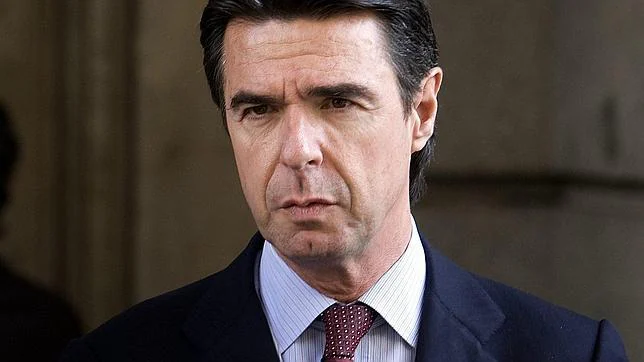
SPAIN The Minister for Industry, Energy and Tourism, José Manuel Soria, announced last week, at a luncheon by KPMG and Europa Press, that the Government 'is not planning' an increase in the rate of VAT (IVA in Spanish) for next year. Nevertheless, he added, should such an increase occur, its impact on the Spanish economy, particularly in the tourism industry, would have to be studied very carefully. However, he insisted that an increase was not on the table. On the subject of taxes, Soria admitted that the Government had promised to reduce them for the tourism industry, but the present climate does not allow for any such thing "for the time being." He did say, though, that electricity charges would have to go up "at some time" to put an end to the deficit in the electricity system.
Labels:
ECONOMY,
ELECTRICITY,
IVA,
LIFE IN SPAIN,
PRICES,
TAXES,
VAT
Thursday, 29 March 2012
3rd most expensive electricity bills go up on Sunday
As we have pointed out before, Spain has the most costly electricity on mainland Europe, after Malta and Cyprus. We have also warned that our bills will be going up on April 1 (fools that we are), although the real costs to our pockets were kept very much up the sleeve of Minister for Industry, Energy and Tourism José Manuel Soria. He waited only two days after the regional elections in Andalucía and Asturias (the PP, his party, did not do anywhere near as well as they expected) to announce that the increase would be in the 5% to 7% region for the 20 million consumers using the TUR rate (see Electricity price hikes expected on April 1). This will mean up to another €5.18 on our monthly bills.
Friday, 23 March 2012
Electricity price hikes expected on April 1
SPAIN We told you about the price hike last week but here is the reason behind it, and the percentages. The electric companies' association, Unesa, says that the peajes should be going up by 30%, which would amount to about 15% on our electricity bill. The Supreme Court sided with the companies and ordered the price hike that should have taken place on January 1 to happen as soon as possible. However, the peaje and the price the companies have to pay for the energy have come down, which means that the bills should not go up by more than 12 or 13%. The Spanish power system is so convoluted and complicated to explain that we are not bothering to do so, but way of a general concept you should know that, first, what is called a Tarifa de Último Recurso (TUR, or 'tariff of last resort') and to which some 20 million consumers -that is, the vast majority including us- are subscribed, and which is revised every three months, is made up of two components: the peajes that pay the companies and are regulated by the government, and, second, the price of energy that results from an auction called Cesur (please don't ask, just accept!).
Friday, 16 March 2012
Electricity to go up on April 1
![]() |
| José Manuel Soria, Minister Industry, Energy and Tourism |
SPAIN (Agencies) Spain's April Fool is in December, so this is not a joke. The Minister for Industry, Energy and Tourism, José Manuel Soria, announced on Thursday that our electricity bills will be going up on April 1 to meet recent decrees from the Supreme Court. The decrees revert to the last two price 'freezes' and oblige the suppliers to re-bill almost 29 million consumers from October last year in order to obtain real costs and thus avoid what is called a 'tariff deficit'. The Minister did not have an exact percentage or tariff scale for the price rise he announced. He did say, however, that anyone thinking that the costs of carrying out the Supreme Court's decrees would 'fall on the backs of consumers, would be very mistaken'. The Government, he said, is preparing 'several measures' to cut the costs of the system and therefore to 'smooth' the price increases.
Saturday, 10 March 2012
Interruption to electricity service
GIBRALTAR (Press release) To enable essential work to be carried out by the MOD the electricity supply to
Edinburgh Estate in its entirety will be cut off on Tuesday 13th March 2012 from 0830 to 1230 hrs. (For more info: Telephone No.20075957 Website : www.gibelec.gi)
Wednesday, 7 March 2012
WARNING: ARE THESE 'BOGUS PLUG-INS' BEING SOLD IN SPAIN?
![]() |
| (Photo: UK Trading Standards Authority) |
(EXCLUSIVE) An article in The Guardian last year pointed out that the claims about these plug-in devices claim to save users anywhere between 15% and 40% on energy bills, but actually pose a risk of fire and electrocution. They were being sold over the phone by 'rogue fraudsters targeting older people', it said. (See similar reports on BBC, Moneywise, and the UK Trading Standards Authority (TSA), the source of the original warning.) Various trading standards authorities in Britain had received complaints about them; one of these came to the conclusion that the companies involved in these scams are not actually located in the UK and that the call centres they use are based abroad and the appliances appear to be distributed by a number of individuals in the UK. Among the companies mentioned in the article are 1 Stop Marketing Solutions, ITC Development Corp, Power Saver, and Athico Ltd, but the fraudsters could be using other names as well, according to the TSA. There is no way of knowing whether these or any other such companies are operating in Spain, but there seems to be a surge of these so-called 'energy-saving' devices appearing in the English-speaking press in Spain, often in full page colour ads. We did come across a Spanish forum about Power Saver, though, with much the same derogatory comments as we mention below.>>>
Labels:
ELECTRICITY,
LIFE IN SPAIN,
SCAMS,
SPAIN,
UK,
WARNINGS
Friday, 24 February 2012
Endesa cuts power to market, but who turned it back on?
![]() |
| Market in the dark (Photo: europasur.es) |
Solidarity from local bars that gave them power
LA LÍNEA (Agencies) The electricity company turned off the light in part of the market in La Línea for lack of payment - like so very many other things that haven't been paid there. It was the fruit & veg and the seaffod section that suffered the most and although they don't have freezers there, they couldn't use their weighing machines. However, the f&v part had the light come on in a short while, though the latter was without electricity for some hours. In some cases, though, and in an act of solidarity, local bars gave them power. The mystery remains, however, as a phone call to Endesa revealed that the company had not put the power back on because there are a great number of bills owed by the Council. So, who turned the light back on?
Thursday, 16 February 2012
Spanish electricity, the most costly in Europe
![]() |
| Plant at Aldedávila, Salamanca |
Prices are third in line behind Cyprus and Malta
SPAIN This not come as a surprise to many of our readers, but the latest report from Eurostat places Spain as the mainland country with the highest electricity prices. Only Cyprus and Malta charge more for power. The typical Spanish home, according to Eurostat uses between 2,500 and 5,000 kW/hr, which here are charged over what is considered the 'psychological barrier' price of €0.15 per per kilowatt/hour (kW/hr). The organization does not evaluate the reasons behind the prices, but the debate has raged for a number of years about why the price of Spanish electricity continues to rise. This year, in fact, prices were not raised on January 1st, unlike every other year for at least seven - the reason behind that is more political than anything else, however (see below). Nevertheless, the regular power companies (using nuclear power, for example) blame the subsidies given to alternative renewable energy power companies (e.g. wind or photo-voltaic). On the other hand, the latter accuse the former of getting grants for plants that have long been paid for, and for taking advantage of the wholesale pooling market, which rises regularly. Electricity prices in Spain have risen sharply since 2004 - 80% before tax, according to Eurostat, which says that in 2004 we paid €0.0872 per kW/hr, and we now pay €0.1597. There is a question, though, about whether the increases that have happened over the years are sufficient.>>>
Saturday, 21 January 2012
Electricity bills to return to 'normal'
You will be able to choose to stay as it is now
SPAIN (Agencies) The country went up in arms in 2008 when the power companies were allowed to bill monthly, with meters being read every other month - and thus causing enormous confusion about 'estimated' bills in between. Now the Ministry of Industry, Energy and Tourism is planning to allow consumers to pay 'only for what they use' (their words, not ours!). The project is in the hands of the National Energy Commission for review. Included in it is the possibility that some consumers might want things to stay as they are, in other words, a reading every other month but monthly bills. What's more, the project also includes the possibility of consumers providing their own reading from their own meters - which used to happen if the meter reader was unable to access the meter. The ministry explained that there had been a 'significant increase in the number of complaints' about estimated bills. IF YOU FIND THIS ARTICLE INTERESTING, USEFUL OR ENTERTAINING, PLEASE CONSIDER THE WORK, EFFORT AND COST IT TAKES TO BRING IT TO YOU. WE WOULD APPRECIATE A DONATION TO CONTINUE A FREE SERVICE.
Thursday, 16 June 2011
Jimena electricity debt is over €220,000
| (Photo: TioJimeno) |
Subscribe to:
Posts (Atom)